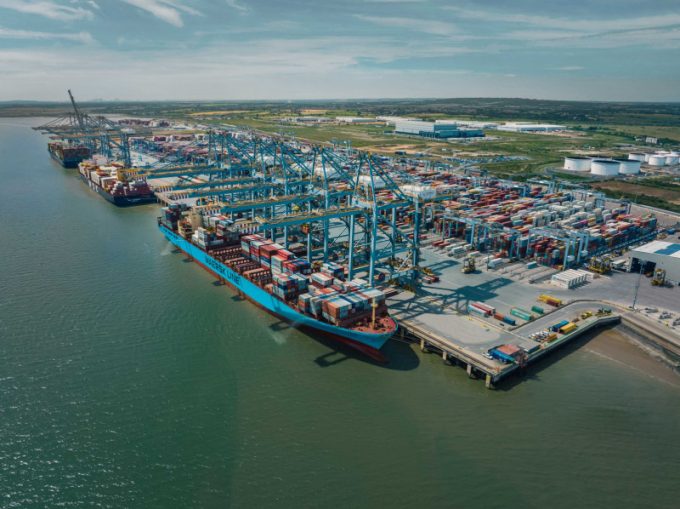
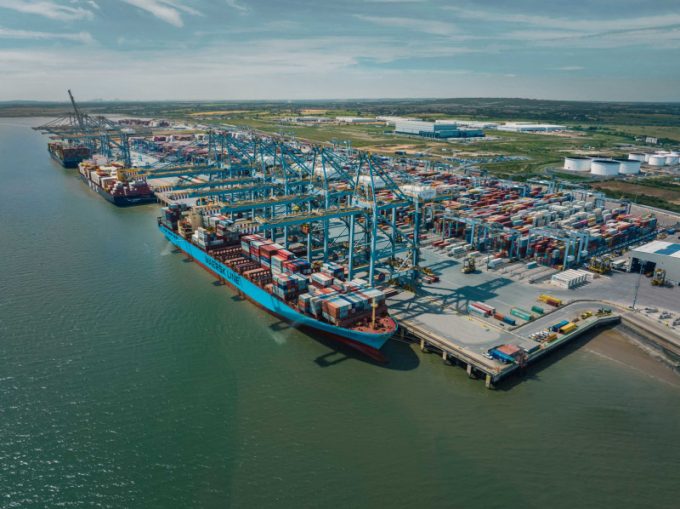
Photo: DP World
Maersk has warned customers of continued disruption across its UK and Ireland logistics network, as high import volumes and a combination of port and inland transport bottlenecks hamper efforts to clear cargo backlogs.
In a customer advisory yesterday, the Danish carrier said sustained high import volumes, vessel schedule delays, adverse weather and recent rail disruptions had put pressure on both port and landside operations across its UK and Ireland network.
“While services are recovering, existing backlogs and high inland storage use mean it will take time for normal network fluidity to return,” it said.
“As these pressures are interconnected, disruption in one part of the network can create knock-on effects elsewhere.”
Maersk assured customers it was reviewing vessel and cargo plans, deploying alternative routes and inland transport solutions where appropriate, and facilitating the movement of empty containers.
It urged shippers to collect import boxes promptly and check empty-container return instructions before dispatching trucks.
According to Kuehne+Nagel’s latest weekly port operational update, London Gateway was recording average vessel waiting times of two days, despite dry and reefer yard occupancy having eased to 75% and 58%, respectively.
High laden container density continues to hamper productivity, while a four-hour IT outage on 19 November halted operations and resulted in numerous rail service failures. Berth restrictions are expected to remain in place until mid-December.
Meanwhile, at Southampton, vessel waiting times averaged 1.5 days and berth windows were moving closer to pro forma schedules, although the port remained reluctant to accommodate ad hoc calls amid wider UK congestion.
And across the Channel, congestion at several major North European terminals continues to threaten schedule recovery.
Meanwhile, Hamburg’s CTH terminal was operating at 99% yard occupancy, with reefer capacity already exceeded and further discharge-heavy vessel calls expected to exacerbate the situation.
At Bremerhaven, where yard occupancy stood at 89%, the diversion of some 1,000 boxes originally destined for Wilhelmshaven was adding to capacity pressure.
K+N said there was “no meaningful schedule recovery currently visible” at Wilhelmshaven, with accumulated delays, adverse weather and late vessel arrivals continuing to disrupt operations.
However, there has been some respite at Antwerp and Le Havre, where yard occupancy has improved.
In Asia, Japanese gateways are experiencing particularly acute yard congestion, with utilisation at three Tokyo terminals ranging between 107% and 120%, while labour shortages are compounding productivity issues at Yokohama.
Yard utilisation at terminals in Port Klang and Vietnam’s Cai Mep also remained above 90%, while renewed carrier demand was putting pressure on operations at Singapore.
And in Australia, carriers have begun omitting calls at Sydney in response to ongoing congestion, K+N reported.
However, some of the longest vessel queues were recorded in Africa, with Mozambique’s Beira seeing average waiting times of more than 13 days, owing to weather disruption and slow inland cargo evacuation, while vessels calling at Ghana’s Tema faced waits of around 5.4 days.
Landside bottlenecks are also evident in the US, where average rail dwell times have reached 13 days at Miami, 11 at Long Beach and 10 at Los Angeles, according to the forwarder.