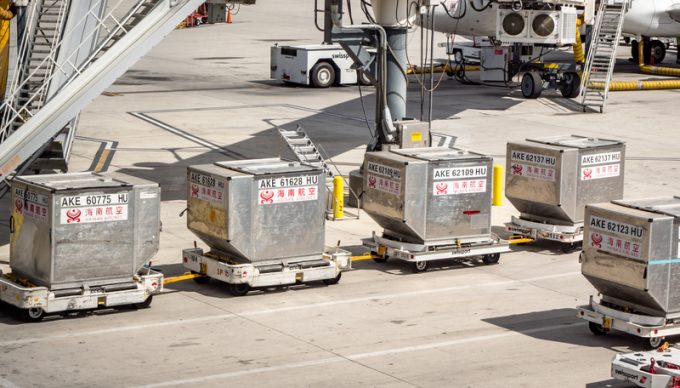
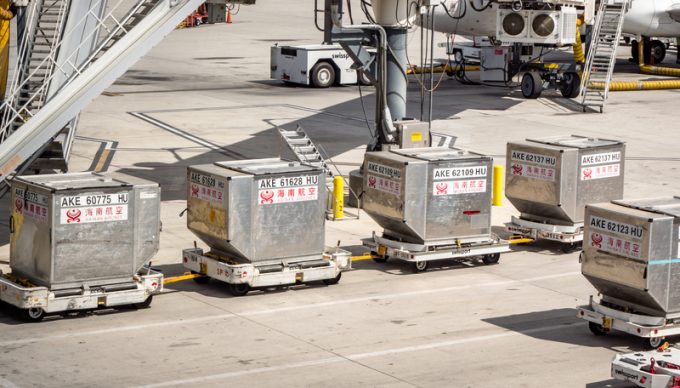
Photo: © Craig Hastings
Airfreight is becoming an increasingly important contingency option for shippers, but new rules on direct air waybills could cause complexity, according to Global Shippers Forum director James Hookham.
At Aviation Connect in Athens this week, Mr Hookham said air had traditionally been regarded as “Plan B”, but since Covid had become increasingly embedded in supply chain planning.
And with post-peak season holidays approaching, he added, shippers were more likely to turn to air transport as deadlines for Black Friday, Thanksgiving, and Christmas approached.
“At a time when goods must be in for onward distribution, to meet sales windows and contractual deadlines, the customer may reach for the air cargo solution.”
But he said airfreight was especially “part and parcel of the planning for many shippers” now, because ocean transport had become less predictable, creating opportunities for the air cargo sector.
Mr Hookham stressed to air cargo stakeholders that shippers should not be treated as a single, homogeneous customer group, their requirements varied, according to cargo type, destination, delivery speed, and handling requirements.
For airports, however, one of the most important considerations was simply “how little time my cargo spends in a particular airport”; and he underscored that efficient interaction between commercial and statutory processes was crucial to minimising that dwell time.
But he also highlighted the potential implications of recent changes on liability in direct air waybills – an issue he said could become increasingly important for shippers, forwarders, and insurers, as the changes by IATA altered where liability could fall in the event of a dispute or disruption involving a DAB.
“Instead of dealing with the original shipper, the decision has been taken for the forwarder [to be the liable party], even though they are acting as an agent in the booking rather than as a contracted party.
“I was surprised by the number of shippers that are affected by this,” he added.
However, he said, it was still too early to determine the operational impact, partly because awareness of the change had been slow to reach the market.
“When I was in Australia and New Zealand last month, I have to say it hadn’t really registered as an operational issue.”
And Mr Hookham warned: “It creates uncertainty, possibly risk; certainly for the forwarder community, with some unwelcome new liabilities which they either seek to avoid, which causes some changes in arrangements, or possibly leads to insurance, which again causes costs, which nobody wants to want to pass on.”
He said the lack of clarity meant the issue could ultimately become a matter for the courts.
“Unfortunately, I think this is going to end up with the lawyers,” he said. “Watch this space because I think it will be a continuing issue.”