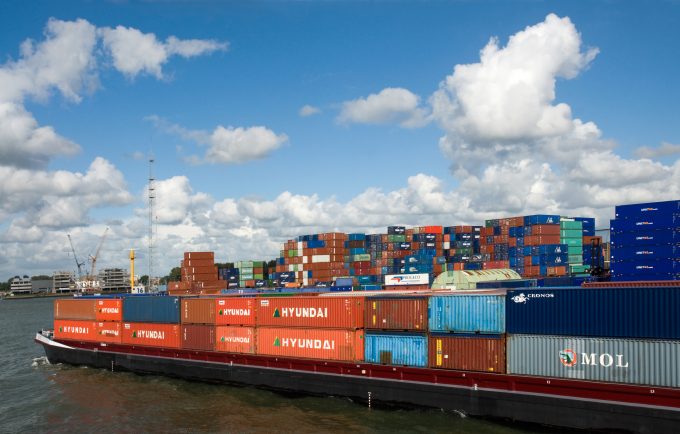
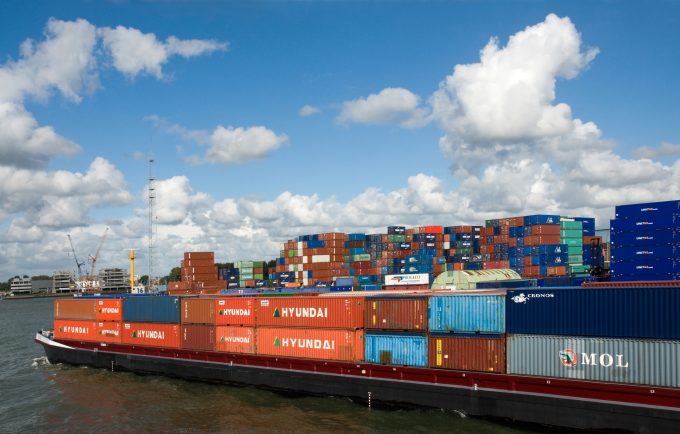
Photo: © Mishkacz
Low water levels may be looming along Europe’s heavily trafficked inland waterways, but the real issue remains congestion across container terminals and the second-class status afforded to barges.
As reported by The Loadstar, last weekwater levels on the Rhine dipped below 150cm – which in 2023 prompted operators to begin implementing low-water surcharges (LWS) – and have fallen further since.
SeasC4U’s Gunther Ginckels told 载星 both the Emmerich and Kaub gauges were low, “but not extreme”, with these stretches of the waterway still navigable, albeit with reduced loading capacity.
Until water levels on these two gauges of the Rhine dropped below 80cm, Mr Ginckels said, “low water has no impact on delays – merely on the capacity and intake of the barges”.
But he added: “The real problem is still the congestion experienced along the deepsea container terminals, with the average congestion‑related delay typically more than 96 hours, depending on terminal and season.”
Homing in on the issues being experienced by barge users at Rotterdam, which has experienced typical handling delays of four days, and over recent years more than a full week, Mr Ginckels said there were “three dominant causes of delay”.
These he identified as terminal congestion, tidal windows, and lock scheduling constraints, noting that all three issues interacted to create “cascading delays”.
For instance, he said, a missed lock slot would lead to a delay of eight to 24 hours – a consequence of having to wait for the next available window, leading to delays in reaching terminals, which, if already congested, left barges at anchorage longer.
Sources have told 载星 that part of the issue surrounding missed lock slots was caused by overcrowding on the waterways, the result of barges being underutilised, more being “half-empty than full”.
It is an issue Mr Ginckels said was in most urgent need of addressing if European inland waterways are to improve, stakeholders and governments needing to come together to ensure better asset utilisation.
Antwerp is also experiencing critical congestion, with berth waiting times rising from 32 to 44 hours (a 37% increase) and containers staying up to eight days on the quay instead of the ideal five days.
“Not the port authorities, nor the container terminals such as MPET, PSA, DP World in Antwerp and APMT, RWG and ECT in Rotterdam, nor the shipping companies are taking responsibility for these situations, nor taking concrete measures to resolve this,” he said.
“On the contrary, they continue to point fingers at each other, with, as result, excessive volumes moving by road, adding to the already heavy congested traffic and profound pollution.”