Booked out until 2028: the AI boom is now air cargo’s growth engine

ai image

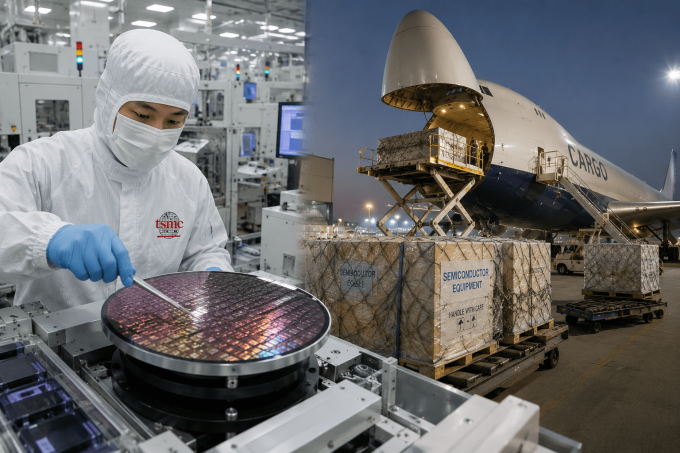
Chipmakers are booked out until 2028, data-centre investment is surging and AI-related cargo is increasingly carrying the wider air freight market.

While ecommerce volumes soften and general cargo demand remains uneven, shipments linked to semiconductors, servers, and data-centre infrastructure are generating some of the strongest growth seen anywhere in the industry.

“Depending on which customer or company you speak to, they’re talking about being booked-out until end of next year, some even until end 2028,” Morrison Express group CEO Asok Kumar told 载星.

“Many are saying this will continue till 2030.”

The market data backs up the optimism. According to consultancy Aevean, US air imports grew 11% year on year in the first quarter, but almost all of that increase came from hi-tech cargo. Those imports surged 70% to 401,000 tonnes, while ecommerce volumes fell 11%, and other general cargo rose just 2%.

The demand extends well beyond chipmakers themselves.

“It could be the companies making the memory chips, the companies that make the machines that help make the memory chips, the CPU manufacturers, OEMs taht manufacture these goods,” Mr Kumar explained. “Their orderbooks all seem to be full.”

Aevean’s data suggests the boom is increasingly centred on data centre infrastructure. The consultancy claims data centre-related air cargo volumes grew 42% last year, led by a 65% increase in GPUs and AI accelerators, and a 70% rise in networking equipment.

That growth is now reshaping trade flows.

Morrison Express is seeing its strongest demand on intra-Asia routes, followed by transpacific services into North America, where investment in chip fabrication plants and data centres continues at pace.

“There’s a lot of investment in Arizona, Texas, and other locations,” said Mr Kumar. “Movements are following that as well. It’s very aligned with what we’re reading and hearing in the market.”

That picture is reflected in wider market data. At the TIACA Executive Summit in Warsaw, WorldACD reported that Asia-Pacific accounted for around 80% of global air cargo growth this year, with South-east Asia overtaking China as the largest source of absolute tonnage growth.

Meanwhile, hi-tech was identified as one of the strongest-performing product categories in the market. The strength of AI-related demand is particularly significant, because it stands in contrast to much of the broader market.

Xeneta last week said there were “not a lot of industry verticals that are booming at the moment”, identifying AI-related shipments linked to semiconductors and data centres as the clearest source of growth, particularly on transpacific routes.

At the same time, capacity growth remains relatively constrained. Aevean estimates international air cargo capacity is only around 1.2% above 2025 levels, the Middle East conflict continuing to suppress growth, despite significant recovery since the early stages of the crisis. Direct Asia-Europe capacity is up 11% year on year, and transpacific capacity 6%, but overall market growth remains subdued.

This imbalance between fast-growing demand and limited capacity helps explain why air freight rates remain elevated.

According to Xeneta, global spot rates averaged $3.40 per kg in May, up 41% year on year, while in late May WorldACD reported worldwide rates 36% higher than a year earlier.

The AI boom is also creating new operational challenges.

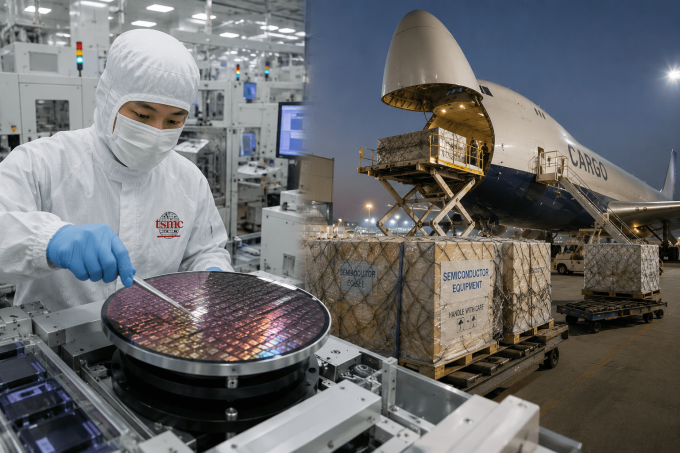
Mr Kumar said some of the machinery used to manufacture advanced semiconductors is becoming so large that aircraft limitations were emerging as a constraint.

“As the chips get smaller, the technology gets higher, and ironically, the machines to make them get larger,” he said. “And then you have a problem with the planes, because they cannot accommodate them.”

As a result, Morrison Express has secured dedicated 747 freighter capacity from airline partners to support key customers moving oversized equipment.

This may offer another lease of life for the ageing 747 freighter fleet, whose nose-loading capability remains difficult to replace when transporting oversized industrial equipment.

Questions remain over how long the current investment cycle can continue. Aevean itself highlighted the possibility of an eventual AI bubble alongside continued geopolitical uncertainty and shifting trade patterns.

For now, however, few in the industry appear worried.

“Certainly this segment of business, and anyone involved in it, is seeing tremendous growth,” said Mr Kumar.

At a time when ecommerce is facing regulatory headwinds, consumer markets remain uneven, and airlines are still navigating the fallout from the Middle East conflict, AI has emerged as the air cargo industry’s most powerful growth engine.

Check out today’s News in Brief podcast, featuring exclusive content from Glyn Hughes, DG, TIACA, and 载星‘s Gavin van Marle


发表评论

了解 Mikhail Family Investment 的更多信息

立即订阅以继续阅读并访问完整档案。

继续阅读