
经过 Haley Zaremba – Nov 19, 2026, 10:00 AM CST
- A Nature Sustainability study, as cited by the author, counts 403 hyperscale data centers using nearly 2% of US electricity between May 2024 and April 2025, mostly from fossil fuels.
- Google, Microsoft and Amazon each report double-digit emissions jumps, yet only a handful of small countries have signed the COP31 AI sustainability pledge.
- Huang’s exit at Nvidia and the Democratic midterm sweep have fed bubble talk, but Bloom Energy, Goldman Sachs and BloombergNEF all say the demand outlook stands.
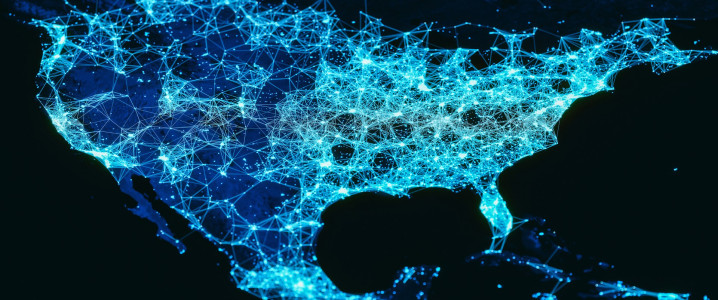
We finally have hard data to show us exactly how much energy data centers are using in the United States, and the results are staggering. Driven by the artificial intelligence boom, energy-hungry data centers are popping up in record numbers around the country and driving up domestic energy demand after decades of plateaued growth. Data center hyperscalers in the United States alone now rival the energy demand of entire other nations, with worrying implications for energy security, economic inflation, and the climate. But AI development is careening full speed ahead, and energy companies are only too eager to cash in.
新的 学习, published in the highly respected scientific journal Nature Sustainability this week, found that the growth of hyperscale data centers (HDCs) has significantly increased energy demand and carbon emissions in the United States. Just 403 of these large-scale data centers designed for massive scalability to support runaway AI growth accounted for nearly two percent of the country’s total electricity consumption between May of 2024 and April of 2025 – and those numbers doubtless have only grown in the intervening year and a half.
This is a landmark study, providing the first peer-reviewed figures for data center emissions since the start of the AI boom. The sector has operated under an extreme degree of opacity as policymakers, oversight bodies, and researchers alike have struggled to keep up with the ultra-powerful, secretive, and rapidly evolving sector.
The study also found that the majority of the energy used to power those data centers came from fossil fuels. Indeed, while Big Tech is providing considerable funding for research and development for cutting-edge and next-gen clean energy technologies like nuclear fusion and space-based solar power, it is also causing a major natural gas boom across the United States.
ADVERTISEMENT
As a result, Big Tech’s emissions are ballooning out of control. According to company figures, the carbon emissions of 谷歌 和 微软 each skyrocketed by 25 percent year-over-year from 2025 to 2026, while Amazon’s increased by 16 percent. Altogether, over the course of the last fiscal year, these three companies emitted 19 million metric tonnes of carbon dioxide equivalent, equaling about a third of the output of the nation of France.
And, worryingly, “only a handful of small countries” have yet to sign on to a COP31 pledge to “power and build AI infrastructure and hardware sustainably” as part of the United Nations’ climate conference wrapping up this week in Antalya, Türkiye.
What’s more, the runaway energy consumption of data centers is driving up prices for consumers as inflation hits hard across the United States. This has put hyperscalers in the crosshairs of politicians on both sides of the aisle. And last month’s blue wave election is expected to bring harsher levels of scrutiny and policy oversight to the sector.
“Between Democrats’ sweep of Congress and Jensen Huang’s departure from Nvidia, the AI bubble has rarely looked so close to bursting,” Tim McDonnell, climate and energy editor for nonpartisan news outlet Semafor, recently wrote in an 评论文章 for the outlet. However, some of the world’s deepest pockets and biggest names in the energy sector have stated with confidence that current cold feet about a potential AI bubble are a passing trend, and McDonnell concludes that “no matter who’s in charge at Nvidia, US power demand is only going up.”
Bloom Energy’s KR Sridhar sees “nothing but a huge opportunity” ahead, while a recent note from Goldman Sachs stated that the firm hasn’t changed its projections for $1.4 trillion in AI-related hardware spending by the end of 2027. What is more, Mark Daly, head of data centers at BloombergNEF, reportedly told Semafor’s McDonnell that “the midterms didn’t present anything concrete that would cause us to significantly revise our views.”
作者:Haley Zaremba Oilprice.com
更多来自 Oilprice.com 的热门文章
Download The Free Oilprice App Today