Photo: VesselFinder
A few days into peace talks being held in Switzerland between the US and Iran, there are tentative signs that shipping is gradually moving again through the Hormuz strait.
The MoU signed between the two countries is set to last 60 days, allowing some sort of more permanent deal to be thrashed out.
Meanwhile, a trickle of container vessels has begun to exit the Persian Gulf, picking their way through waters that are understood to still contain mines and demonstrating the practical obstacles to fully reopening navigation channels.
There are currently two ways to access the Gulf: a southern route hugging the coast of Oman; or a northern route through Iranian waters – a full mine-clearance operation could take anything from one month to six.
Maritime intelligence firm Windward recorded 20 vessels – of all types – moving inbound yesterday, 17 with AIS switched on and three sailing “dark”; while 16 vessels exited the Gulf, nine with AIS on and seven “dark”. The majority of transits in both directions used the northern route, which requires clearance from Iranian authorities.
Windward data currently lists 47 containerships remaining in the Persian Gulf, and liner shipping intelligence platform Xeneta said the recovery in box shipping would likely take place in three stages.
“Phase zero is the immediate priority, of extracting ships and crew stuck inside the Arabian Gulf for almost four months,” Xeneta said.
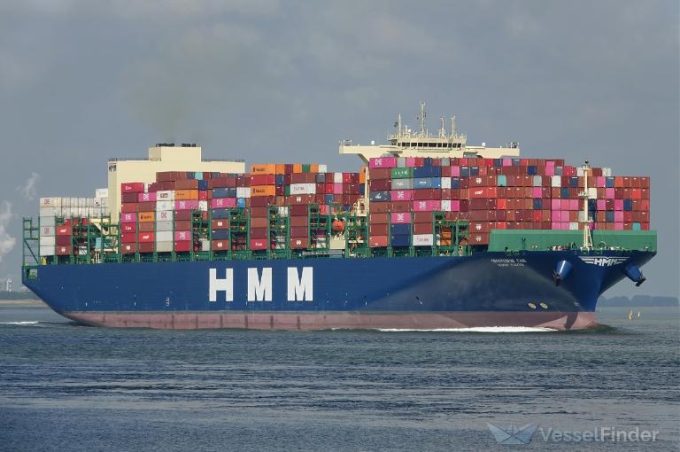
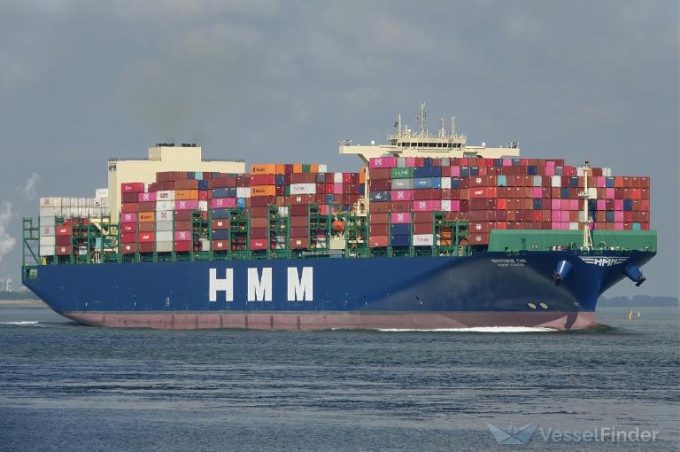
This would include the 16,000 teu HMM Daon, which is reportedly exiting today, trapped since the onset of the conflict. It was deployed on the Premier Alliance’s Far East-Middle East GS2 service.
The following, recovery, phase will see the “return of feeder and regional services into Arabian Gulf ports”, said Xeneta.
“These smaller services carry lower risk if disrupted and will form the foundation for reactivating intra-regional trade. As feeder connectivity is restored, intra-Arabian Gulf services — which have fallen from 21 pre-crisis to 10 today — can begin to expand again,” it added.
This could explain the course of the 7,700 teu MSC Qingdao, which reportedly exited the Gulf over the weekend heading for Khor Fakkan.
The vessel is deployed on MSC’s Iraq Express service, which traditionally hubs at Abu Dhabi, but would have likely been using Khor Fakkan since the conflict as an alternative.
Once feeder services are up and running, Xeneta said, the deepsea Asia-Europe and Asai-North America east coast strings could begin returning to the region, which has traditionally acted as a relay transhipment hub connecting these services with other strings to Africa, India, and the wider Indian Ocean rim.
However, the timing of this is will very much depend on how negotiations in Geneva progress, and throwing further uncertainty into the mix is the Iranian proposal that all ships transiting Hormuz will have to obtain special insurance cover from the Iran-administered Persian Gulf Strait Authority
According to shipping newspaper Lloyd’s List, the proposal is that the cover would be provided free by Iran for the 60-day period covered by the ceasefire MoU – but it leaves open the possibility that Iran could demand vessels pay for the insurance at a later date, effectively paving the way for Iran to introduce a de facto toll on Hormuz transits, and thus introduce a new factor of uncertainty to the situation.
“Carriers had to act fast when the conflict escalated and the Strait of Hormuz closed in February, but the return will be far more cautious,” commented Xeneta chief analyst Peter Sand.
“A sudden deterioration in the security situation would have the most severe network-wide impact if it causes a failure on a mainhaul Asia-Europe or Asia North America string. So carriers will start with smaller, lower-risk feeder services,” he said.
Over the longer-term, assuming normality had fully returned, Mr Sand suggested the established Gulf hubs – Dubai and Abu Dahbi handled a combined 22m teu last year – could be facing a very different future, increasingly being served by transhipment ports outside the Gulf.
“The geopolitical situation will remain fragile for the foreseeable future, and carriers and shippers will want to protect against the disruption caused by the closure of the Strait of Hormuz first time round.
“Increasing use of transhipment services into the Gulf creates additional transit time, but it insulates the long-haul network from future disruption,” he added.