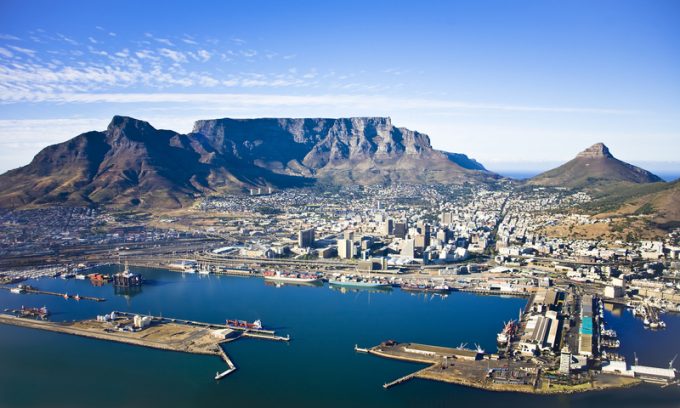
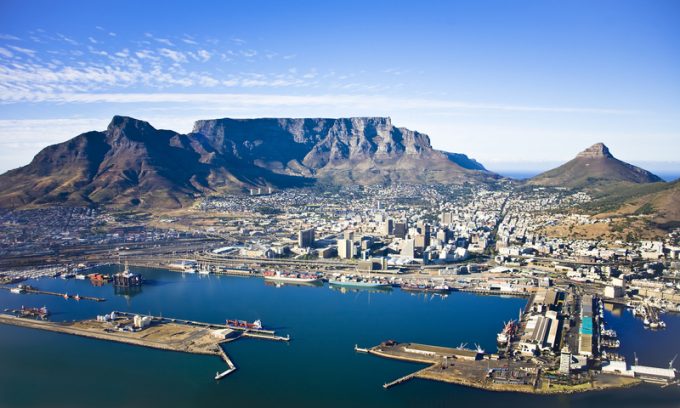
© Andrea Willmore | Dreamstime.com – Cape Town Harbour and Table Mountain
One battle doesn’t win a war, but just getting to a stage where South Africa’s port system can now be reformed is an achievement by itself.
The decision of South Africa’s government to formally endorse the separation of Transnet National Port Authority (TNPA), the country’s de facto port landlord, from the Transnet rail operations is a step in the right direction – one that its shippers, forwarders, and other supply chain stakeholders have been demanding for years.
Operations at South Africa’s key container gateways of Durban, Cape Town, Coega and Port Elizabeth have been plagued by congestion and delays for years.
At some times it is worse than others – the brutal seas and high winds off the Cape of Good Hope during the winter months routinely force ports to shut. However, the poor efficiency that plagues its terminals during more clement times – often the result of badly maintained equipment, inefficient landside operations and thorny labour relations – can be laid pretty squarely at the door of management.
And while it’s great the government has finally kicked off the reform process of Transnet, it also means some of the really hard work begins now, as the South African Association of Freight Forwarders argues when it says the real imperative is “getting corporatisation right”.
The central point of the reform is that TNPA will be moved out of the Transnet group – which will continue to manage Transnet Port Terminals, but with much reduced investment power – and become a standalone state organisation with the ability to take its own investment decisions on both infrastructure and superstructure, and independently manage landlord revenues.
However, as a SAAFF has argued in its weekly update, the success of this programme will be predicated on the “(1) independently assessed valuation, (2) allocation of liabilities, and (3) governance arrangements that protect investment capacity, ensure port revenues, support port development, and align tariffs with efficient costs and measurable service delivery”.
It added: “This reform must advance a systems approach, with ports, terminals, rail, road and border processes coordinated around shared accountability and the time, cost, and reliability of moving cargo.”
But this is only one battle. There are plenty more ahead, and the principal evil it is trying to rectify – congestion that can spread from a quay to a yard and way into the hinterland – can trouble even the most efficiently designed and managed systems, as Shanghai, Ningbo, and Singapore are demonstrating.
So here is a word of caution: don’t expect too much too soon, and be careful in laying the blame when mistakes, hiccups, or missteps occur, as they almost inevitably will.
Reform processes of this sort take time, and the wins rarely come as quick as many hope or expect, but if TNPA achieve what it has set out, the whole export-orientated country will benefit.