
Image: © Kateryna Chyzhevska
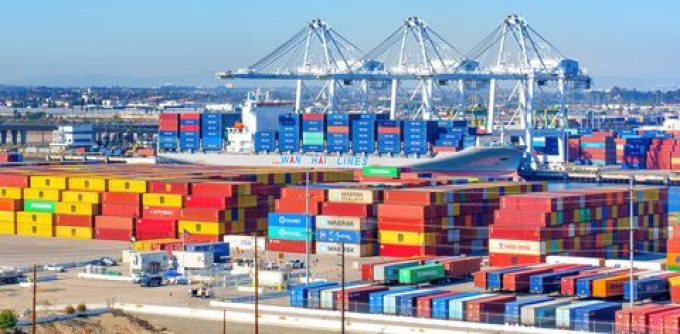
Taiwan liner operator Wan Hai’s re-entry into the transpacific market back in 2020, was a move that has paid off, as Asia-US East Coast is now the company’s largest revenue contributor, said chairman Chen Po-ting on Friday.
Since 2020, Wan Hai has generated about TWD300bn ($9.11bn) in ocean freight revenue.
Mr Chen said: “We accelerated fleet expansion during the pandemic, taking a calculated risk, despite concerns among major shareholders that the market could return to normal once the health crisis subsided. We chose phased investments and continued monitoring market developments.”
Despite concerns that the current massive orderbook for new box ships could depress rates next year, since Covid the liner shipping industry had moved from monopolistic competition into orderly rivalry, he added.
Freight rates are no longer determined solely by supply and demand, with geopolitical developments, climate change, and logistical bottlenecks increasingly shaping the container shipping market.
Mr Chen asked: “Why must freight rates remain the same as before? Rising costs associated with green energy, environmental protection, and human rights are also changing the economics of shipping.”
To strengthen its long-haul routes, Wan Hai acquired second-hand ships and ordered larger vessels, and its capacity now stands at 627,456 teu, having grown by more than 132% since the pandemic, the second-largest increase among the world’s 12 biggest container shipping lines. The Taiwanese operator is the only major shipping line to operate a fully owned fleet, and does not charter any vessels.
Wan Hai will take delivery of 11 ships in 2027 – ten 16,000 teu vessels and one of 8,700 teu.
The additional capacity will support the deployment of larger vessels on routes serving the US east and west coasts, South America, the Middle East, India, and within Asia.
Ознакомьтесь с сегодняшним News in Brief podcast, on the latest developments in US tariffs and customs enforcement, what a Democrat-controlled Congress could mean for the US trade agenda – as well as air freight updates.