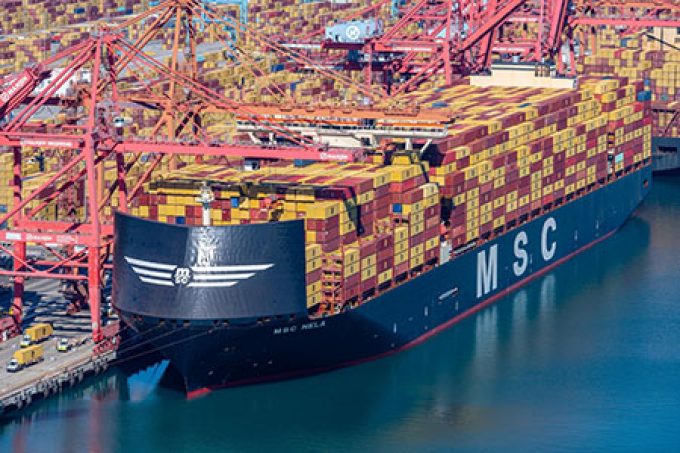

Photo: Port of Long Beach
The Californian port of Long Beach is predicted to handle more than 10m teu this year, for the first time.
“It’s been a peak year,” Port of Long Beach CEO Noel Hacegaba told Лодстар on the sidelines of the World Ports Conference in London this week.
“This could well be the first 10m teu year for us.”
His comments followed a record-breaking September, when throughput hit 997,177 teu, its busiest month ever, surpassing the previous record set in October 2024.
In the first nine months of the year, Long Beach has moved just under 7.8m, up 3.9% compared with the same period last year.
Dr Hacegaba said the very strong growth in transpacific volumes had been due to a combination of shippers front-loading imports to avoid the threatened USTR 301 port fees on Chinese-owned and -operated vessels, concerns about the viability of the Panama Canal as El Nino emerged, and fuel costs.
“There’s no question a lot of front-loading has been going on, and the recent decision to postpone these [port] fees has moved the goalposts – and we now expect another round of front-loading before the new 9 January deadline.
“Then you have worries about the Panama Canal, which has seen cargo diverted to the US west coast, and that’s coming on top of shipping lines increasing fuel costs,” he said.
The cargo surge had led to MSC deploying some of its largest ships, of 24,000 teu capacity, on its standalone transpacific Sentosa service, which calls at Long Beach’s Total Terminal International (TTI) facility
“Normally the ships on this service are smaller, but we have handled some of their largest ships, with 100% discharging and 100% loading – this is a glimpse of our future,” Dr Hacegaba said.
According to Xeneta’s eeSea liner database, the usual average capacity of a Sentosa service vessel is 18,500 teu, with its largest at 19,500 teu. However, during the peak demand period of August, September, October, the carrier deployed two 24,000 teu vessels on the string, MSC Nela и MSC Arina.
“It’s also notable that 50% of TTI’s inbound boxes leave the port by train,” he added.
On the threat of industrial action at Long Beach and neighbouring Los Angeles, Dr Hacegaba said: “We are closely monitoring the negotiations between ILWU Local 26 and the Pacific Maritime Association, and we remain hopeful both sides will reach an agreement soon.
“While the affected watchmen provide security within individual terminals, port-wide security provided by the Harbor Patrol and the Long Beach Police Department continues uninterrupted during negotiations.
“Although Port of Long Beach is not a party to the negotiations, we want to assure our customers that we remain committed to moving cargo through our port safely and reliably,” he said.
Meanwhile, the forthcoming closure of the Vincent Thomas Bridge in the San Pedro area for refurbishment works – due 7 November and lasting for 16 months – is forecast to disrupt hinterland cargo movements, and has led the port and its terminal operators to offer hauliers additional gate hour openings on Friday evenings and Saturdays for a six-week period.
It’s part of a pilot programme “that could be extended and is among the numerous measures Long Beach and its partners have developed to reduce the impacts of the bridge closure on people and cargo”, explained Dr Hacegaba.