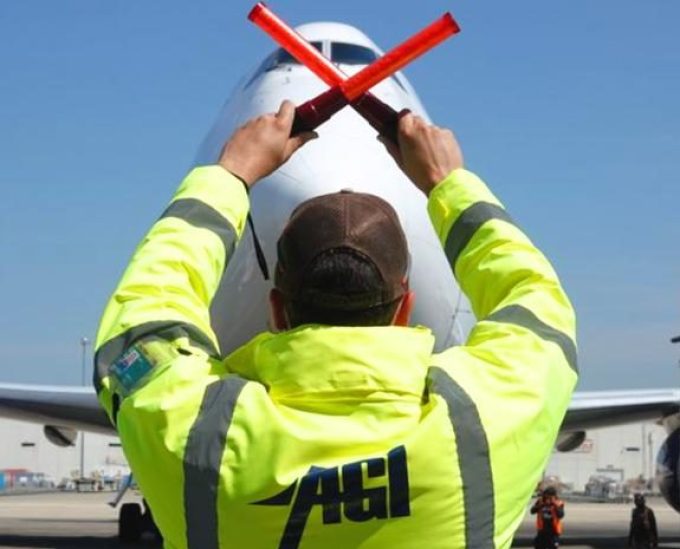

Photo: AGI
Alliance Ground International’s (AGI) dispute with airport workers’ union 32BJ SEIU has widened to holiday pay, the union saying workers at New York’s JFK Airport have complained that the cargo handler failed to pay them all they were owed.
The complaints are the latest development in a months-long campaign that has seen the union take workers’ safety allegations to federal regulators, as well as a protest outside TIACA’s Air Cargo Forum in Miami last month.
AGI has pushed back on the safety allegations, citing its procedures for equipment inspections, maintenance, and training, and saying an OSHA inspection does not establish a violation.
The handler has accused SEIU of using “false and misleading claims” to pressure it into recognising the union. Indeed, AGI sued SEIU and its Local 32BJ in Florida’s state court in July and sought a preliminary injunction, alleging the campaign had cost it more than $19.8m in annual airline business, including contracts with IAG carriers and Singapore Airlines. The union called the suit “meritless”, and the case remains open.
32BJ said workers had filed the holiday-pay complaints with the New York State Department of Labor, under the state’s Healthy Terminals Act. The union estimates workers could be owed hundreds of thousands of dollars in back pay and scheduled a rally at JFK today. It did not say how many workers had complained or how it calculated the estimate.
Freddie Robles, an AGI security officer at JFK, said he worked 40 hours a week on the overnight shift and had worked on seven holidays this year, from New Year’s Day to Veterans Day.
“AGI still has not paid me all the holiday pay I’m owed,” he said in a statement issued by the union. “When my paycheck comes up short, my entire life gets thrown off balance.”
New York’s Department of Labor says covered workers – some 700 AGI staff at JFK and LaGuardia, according to the union – are entitled to at least 12 paid holidays a year.
In May, 32BJ said, it had filed federal safety complaints on behalf of 21 AGI workers at JFK and LaGuardia, alleging faulty tug brakes, inadequate training, and insufficient heat protection. AGI told Лодстар it cooperates fully with OSHA and declined to discuss pending investigations.
At TIACA’s Air Cargo Forum in Miami last month, AGI chief executive Jared Azcuy said the company had added AI to its warehouse cameras in a move to boost safety.
“Our first focus was really on safety, and we put AI technology on top of all our existing cameras,” he told a conference panel. “It wasn’t meant to be punitive. It was meant to be coaching them and getting the best safety environment out of the team.”
AGI told Лодстар it used Voxel’s computer vision system at all its warehouses, software that analyses CCTV footage around the clock and flags hazards such as forklifts passing too close to pedestrians, unsafe lifting, spills, and missing protective equipment. The company says it uses clips to train new hires, refresh existing staff’s training, and talk through specific incidents with workers.
It added that the system “does not replace mechanical inspections, preventive maintenance, or the physical examination of equipment for defects such as faulty brakes or seat belts”. Staff are expected to check equipment before use, report faults, and take unsafe equipment out of service, AGI said.
AGI’s annual safety report says recordable injuries at its JFK operation fell 91% over one year after it introduced Voxel, while the frequency of workers’ compensation claims fell 36%. Voxel’s own case study noted: “AGI’s JFK operation had an elevated injury rate, serious injury potential from falls and powered industrial trucks, high turnover, 24-hour operation with limited visibility, and high rates of cargo damage.
“But they also had a new leader who was motivated to build a new safety culture from the ground up. Voxel gave them the tools to do that… the results have been excellent so far.”