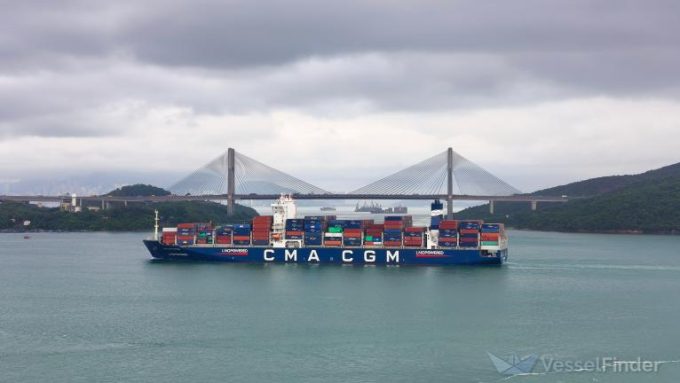

CMA CGM Petra @VesselFinder
CMA CGM yesterday declared General Average on the 8,000 teu CMA CGM Petra, which suffered a fire in one of its containers on 23 August, while the vessel was en route from Singapore to Colombo.
The fire was initially contained by the crew, with no injuries reported, and was later assisted by professional salvors with the firefighting and salvage operations while the vessel was at anchor near Penang.
It was subsequently towed to Port Klang, where some 450 containers were unloaded for inspection.
The 2024-built vessel is owned and operated by the French carrier, which yesterday declared General Average “as a consequence of the extraordinary costs incurred for the safety of the common maritime adventure”.
As a result “General Average security will be required from all Cargo Interests prior to the delivery of their cargo,” said cargo claims consultancy W K Webster, which is assisting in the security requirements for its clients.
“We are liaising with the appointed Average Adjusters regarding the form and wording of the General Average securities required and a further update will follow shortly in this respect.
“We are also arranging for a fire expert to attend the vessel to investigate the cause and origin of the fire,” WK Webster added.
Meanwhile, earlier this month the English Commercial Court settled a decade-old dispute between Maersk and Indian shipper Sree Rayalaseema Hi-Strength Hypo over a fire that broke out on the 8,400 teu Maersk Seoul on 19 July 2015 shortly after the vessel had departed Jebel Ali.
This month the court awarded $13m to Maersk after establishing that the fire was caused by a consignment of calcium hypochlorite in a number of containers which although had been properly declared to Maersk, had been improperly packed within the containers themselves.
“The applicable IMDG Code provisions required packages within containers to permit adequate air circulation throughout the cargo,” said an analysis of the judgment by Clyde & Co lawyers.
“Instead, the cartons containing the calcium hypochlorite had effectively been packed together as a block, restricting both air circulation and the dissipation of heat.
“The expert evidence was that compliance with the IMDG Code requirement would have greatly reduced the risk of a runaway reaction and, more likely than not, would have prevented the casualty.
“By failing to pack the calcium hypochlorite in accordance with the IMDG Code, Sree breached that warranty and became liable to indemnify Maersk for the resulting losses,” they added.
However, the court’s judgment also noted that despite being aware of the containers’ contents, Maersk’s dangerous goods team had not checked that they were packed correctly before loading, and therefore the containers did not comply with parts of the carrier’s acceptance policies – although this was not found to the cause of the casualty.
“Maersk ultimately succeeded despite shortcomings in its own dangerous goods acceptance process.
“A different evidential picture on causation, or a properly advanced contributory negligence case, could potentially have made those shortcomings considerably more important,” the Clyde & Co briefing concludes.