
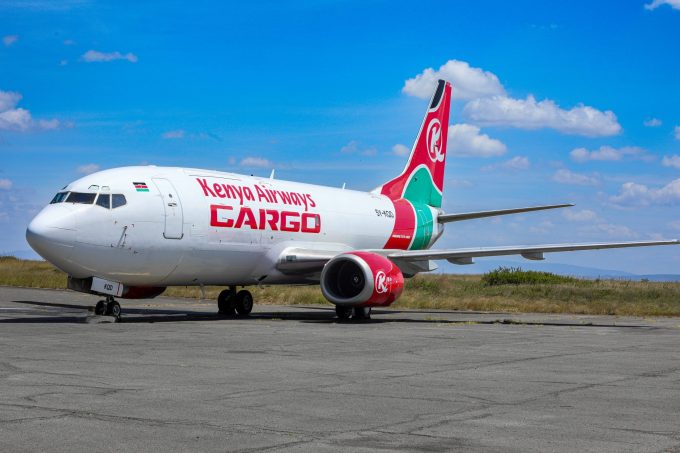
Photo: Kenya Airways Cargo
Underlying growth in African airfreight demand is proving more significant than temporary benefits provided by shippers switching from ocean services, as expanding trade and new cargo flows create longer-term opportunities for the sector, according to Kenya Airways.
The carrier acknowledged to The Loadstar that congestion, geopolitical uncertainty, and unreliable shipping schedules had encouraged some business to move cargo to airfreight, but said this was only one element of a broader increase in demand.
“Some of the recent growth has been linked to temporary market conditions, including supply chain disruptions, seasonal cargo peaks, geopolitical developments, and capacity constraints in competing transport modes,” said a spokesperson.
“However, we do not expect a complete reversal of the growth currently being observed. The more significant development is the emergence of long-term structural growth drivers,” countering claims made by some Loadstar sources.
Kenya Airways identified expanding consumer markets, population growth, urbanisation, industrialisation, and increased regional integration through the African Continental Free Trade Area (AfCFTA) as factors supporting sustained demand for air cargo.
The strongest demand continued to be for East African perishables, particularly flowers, fresh fruit, and vegetables destined for European markets like Amsterdam, London, Paris, Brussels, and Frankfurt.
“We are also seeing continued growth in pharmaceuticals, courier and express products, e-commerce shipments, high-value cargo, and specialised logistics solutions,” the airline’s spokesperson continued.
Citing increasing demand on Africa-Europe, Africa-Middle East, Africa-Asia, and intra-African trade corridors, the spokesperson noted that Nairobi was positioned as a gateway connecting East, Central, Southern and West Africa with international markets.
E-commerce expansion was also contributing to demand, as shorter delivery expectations encouraged retailers and logistics providers to use air cargo for fulfilment and inventory replenishment.
“Collectively, these trends position African air cargo for continued growth in the years ahead,” the spokesperson noted, highlighting emerging cargo categories, pointing to increased movement of solar panels and related equipment destined for the US.
Historically, much of this traffic moved directly from Asia to the US, but changing trade policies, tariff considerations, and manufacturers’ efforts to diversify sourcing arrangements had created alternative logistics corridors involving East Africa.
Since the middle of the year, these movements have generated significant charter and ad hoc freighter activity through Nairobi and the wider region, according to the carrier, reflecting what has been seen elsewhere in the global supply chain.
The spokesperson said that although some disruption-driven demand could moderate as conditions across competing transport modes normalised, the carrier remained positive about the medium and long-term outlook for African airfreight.
“We see clear evidence of structural growth driven by e-commerce expansion, pharma distribution, perishables exports, regional trade integration, supply chain diversification, and emerging industries,” they added.