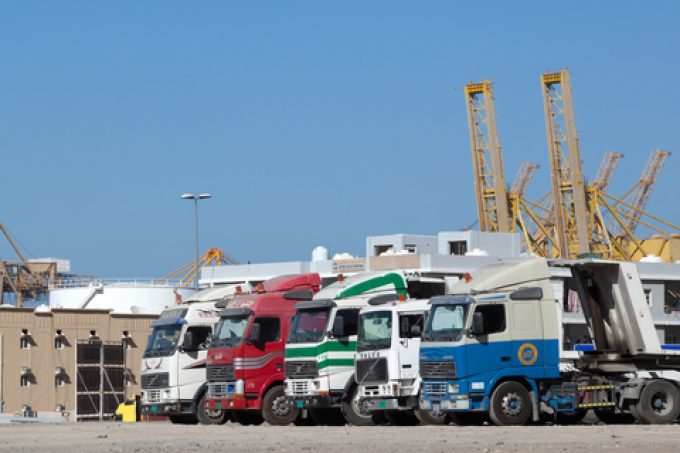

ID 51745063 | Port ©
Typhoonski | Dreamstime.com
The collapse of Omani-led talks to resolve the Straits of Hormuz passage, which were due to take place in Salalah yesterday, will deal another blow to Middle East shippers now struggling with the highest container shipping costs on record.
The US-Israel-Iran conflict is now into its seventh month and has effectively closed the Hormuz straits to container shipping services, with beleaguered importers in the Gulf region now seeing spot rates hit unprecedented levels, even surpassing the pandemic-ear highs.
According to the UKMTO, 978 vessels of all types have performed outbound transits through Hormuz as per AIS vessel movements since the onset of the conflict, while 717 have completed inbound transits – however, container ships accounted for just 6% of these, representing just over 100 individual sailings.
The UKMTO said the risks to vessels transiting the waterway remained severe, its highest level.
As a result, Gulf-based importers will have to continue utilizing landbridge solutions via Gulf bypass ports, according to liner intelligence platform Xeneta’s chief analyst Peter Sand.
“The Strait of Hormuz has now been closed to container shipping for more than half a year and alternative land bridges into the Middle East, particularly via ports in Jeddah and Khor al Fakkan, are fully established,” Mr Sand noted, although limited capacity has also played its part in surging freight costs.
“This has brought stability, but it is also coming at a cost for shippers, with average spot rates from China to Jeddah and Khor al Fakkan up 256% and 479% respectively since 28 February.
“These extraordinary increases have seen spot rates on these trades surpass the previous record highs set during the Covid-19 disruption,” he added.
According to Xeneta data, the average spot rate from China to the Saudi Red Sea gateway of Jeddah has now reached $10,870 per 40ft, while from China to the newly established UAE bypass port of Khor al Fakkan has reached $10,626 per 40ft.
Meanwhile, haulage rates out of ports such as Jeddah, King Abdullah port and Khor Fakkan are also at historically high levels.
“The increased cost is in addition to longer transit times and worse reliability, but while the Strait of Hormuz remains effectively closed to container vessels, shippers have little other option to get their goods into the Gulf region,” Mr Sand said.
Meanwhile, for shippers in the upper Gulf markets such as Iraq and Kuwait, last year’s implementation of the TIR trucking documentation system in Iraq has given them an alternative option.
The IRU said last week that 5,000 TIR carnets have been used this year on the Turkey-Iraq trucking route, with a similar number used on the Syria-Iraq route in the same period.
According to an IRU study from April, Iraq’s implementation of the TIR system had rapidly improved transit times – one trucking shipment from Poland to the UAE was completed in just 10 days earlier this year, compared to the previous 24-day transit time; while another shipment from Turkey to Kuwait was completed in four days, compared to the previous 45-day transit time by sea.