
ID 305802843 ©
Hugo Kurk | Dreamstime.com
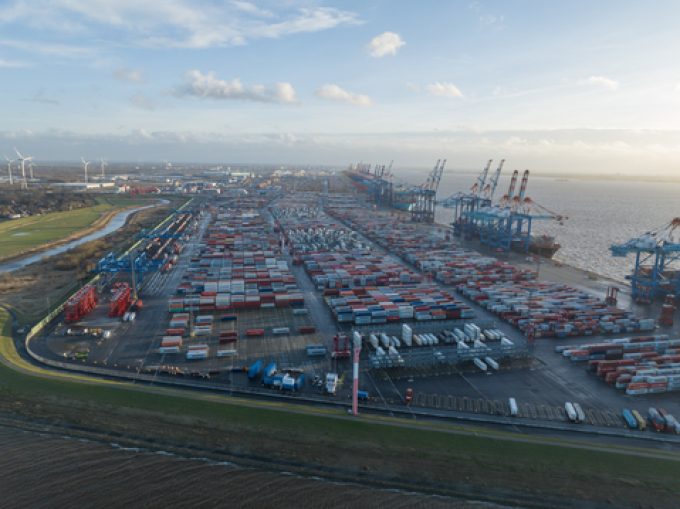
The prospect of widespread industrial action at Germany’s ports retreated yesterday after dockworker members of the ver.di union agreed to accept new contract terms offered by the Central Association of German Seaport Operators (ZDS).
“Strikes at the ports of Hamburg, Bremen, Bremerhaven, Emden, Brake, and Wilhelmshaven have thus been averted for the time being,” said ver.di.
“However, the employers’ side still has to approve the result,” it added.
Workers have won: a 3.4% wage increase for the next year, backdated to 1 August; a €200 increase in holiday pay; and dockers involved in “high-turnover container operations” will receive an additional annual lump sum, increased by €416 from 1 January.
“The Federal Tariff Commission has decided to accept, on the basis of the member survey and a consideration of the overall situation,” said Sylvi Krisch, who led the negotiations for ver.di with Francisca Bier.
“It was a difficult round, but the bottom line was acceptable,” added ver.di, while union officials said a 24-hour ‘warning strike’ by members in mid-August had been the catalyst for this week’s agreement.
“This signal;ed to the employers that we are serious about our collective bargaining demand,” said Ms Krisch.
The agreement staves off the potential for further cargo backlogs building in Germany’s three main container gateways of Hamburg, Bremerhaven, and Wilhelmshaven – although shippers and freight forwarders are still encountering some congestion.
According to Kuehne + Nagel, operations remain most affected at Bremerhaven, where yard utilisation has reached 90%, while at Hamburg it is 80%-85%, and in Wilhelmshaven it has dropped to 65%.
In addition, data from Xeneta’s liner database shows an improvement in vessel waiting times since the beginning of September.
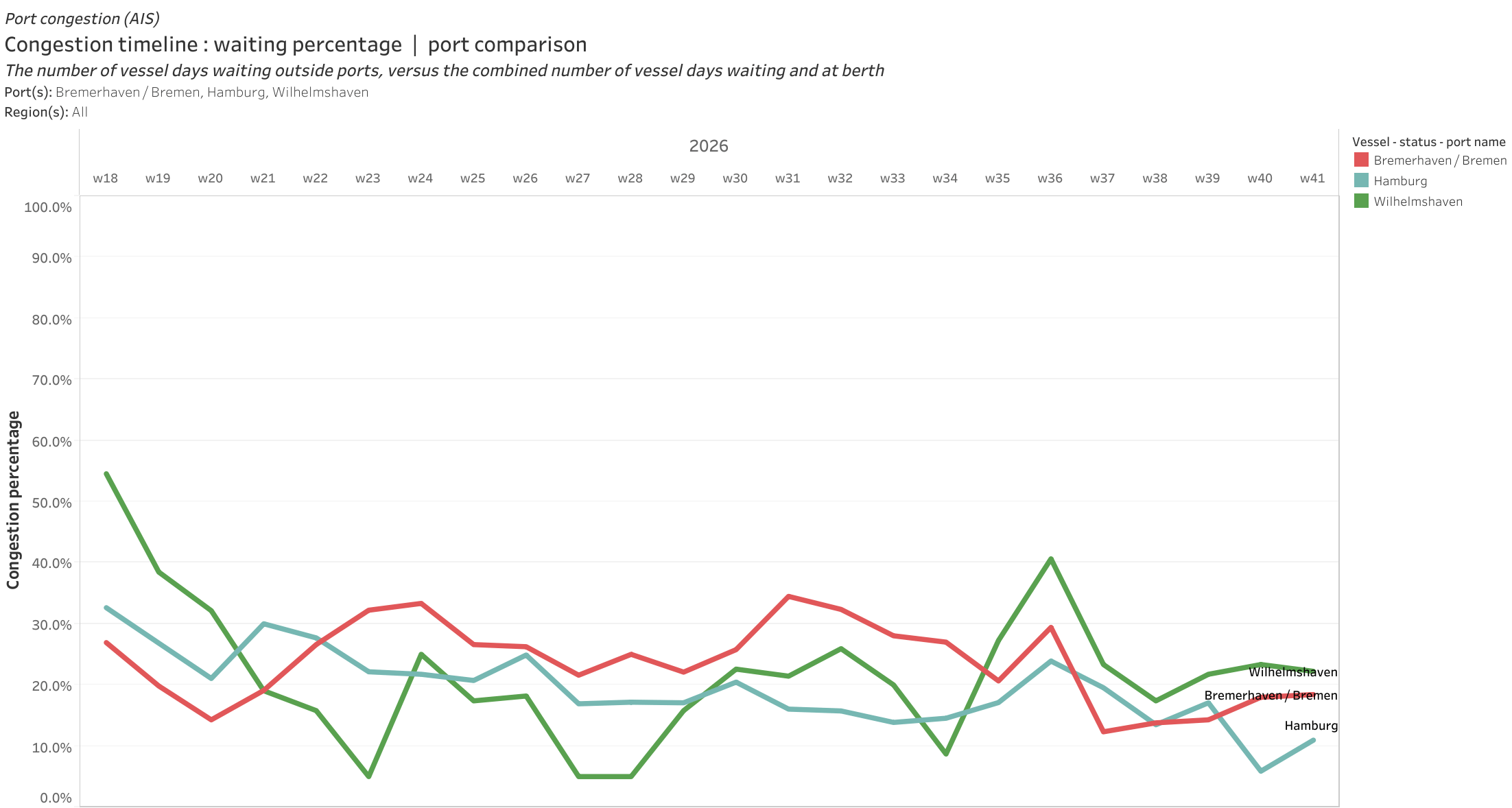
Source: Xeneta’s eeSea
However, German shippers in the central Rhine industrial belt continue to face hinterland congestion caused by low water levels on the Rhine, and the subsequent restrictions on barge movements to the key gateways of Rotterdam and Antwerp. Maersk warned yesterday that the mode may have to be abandoned for the time being.
“There is a possibility that conditions may deteriorate to a point where barge transport is no longer operationally feasible,” it told customers.
According to Drewry’s senior associate of ports and terminals, Eirik Hooper, 60 trucks are required to carry what just one 1,500 tonne barge can transport, but large numbers of the inland river craft continue to be stranded on the upper Rhine.
“The Kaub gauge, which monitors the depth of the channel at the critical choke point of the river, hit 6cm in August, which is the lowest since records began in in 1880, which keeps about 1.2 metres of navigable fairway,” he explained in the consultancy’s recent Freight Loop podcast.
“So barges either sailed only a fraction loaded, or not at all, with quite a few of them stranded on the upper Rhine, unable to get back down to the Amsterdam, Rotterdam, Antwerp range.
“There were credible estimates of about a third of a percentage point off German GDP for the quarter if the drought had persisted into September,” he added.
With Maersk’s low-water Rhine surcharges set to continue, this forecast may prove correct.
According to operator Contargo, its barges are experiencing average waiting times of 36 hours in Antwerp and 56 hours in Rotterdam.