Source: Blue City Aviation
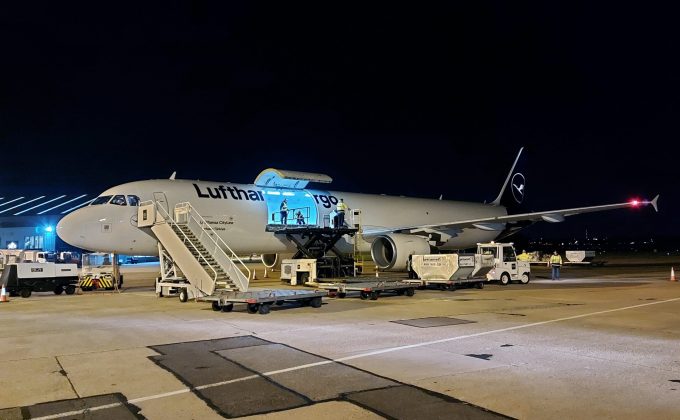
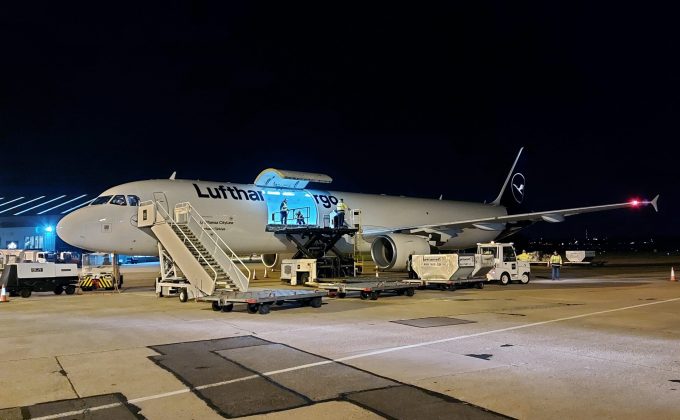
Lufthansa’s logistics division – whose main component is Lufthansa Cargo, posted an adjusted EBIT in Q2 of €116m, an increase of 58% on the same period last year while revenues were up 27% year on year, to just over €1bn.
At a conference call in Frankfurt today, attended by The Loadstar, group chairman and CEO Carsten Spohr, said: “The second-quarter operating environment for air cargo was anything but easy, the conflict in the Middle East affecting the reliability of global supply chain networks which had to be adjusted at short notice in an environment like this, one thing becomes clear once again.
“The more complex and unpredictable the global economy becomes, the more a growing cargo business, like Lufthansa Cargo, shows its worth.”
He added: “In particular, the crisis in the Middle East triggered a surge in demand on routes to the Far East and for our new and now almost daily, transpacific connection, as well as our new intra-Asia routes.”
He went on to highlight that “this commercial success was the result of the consistent execution of our strategy and our increasingly strong focus on high-margin products, semiconductors and more and more IP server equipment for the growing AI-driven investments in computers around the world and data centres”.
The group noted that, in the context of a significantly changed market environment, due to the conflict in the Middle East and the corresponding reduction in competitors capacity in the region, Lufthansa Cargo’s freight business had “gained momentum in overall terms”.
The reduction in capacity on the market and the strong rise in fuel costs led to a significant increase in yields compared with previous quarters.
Demand was driven by continued strong business in the Asia/Pacific region in particular. This was reflected in an increase in cargo tonnage. India had also performed strongly, said the company. But higher fuel and charter costs in particular had a negative impact on expenses.
Capacity, expressed as available cargo tonne kn (ATK), grew a modest 2% versus the previous year, mainly driven by 6% bellyhold growth, particularly from Italian airline subsidiary, ITA Airways. Traffic, expressed as revenue cargo tonne km (CTK) increased 3%, while the cargo load factor was stable, at 62.9%.
Mr Spohr also drew attention to the modernisation of Lufthansa Cargo’s ground infrastructure.
“At the end of June, we brought the first, and most important, phase of our new Frankfurt cargo centre into operation. This will make our handling operations even more reliable, more efficient, and more productive, and obviously will contribute to the premium positioning of Lufthansa Cargo.”