
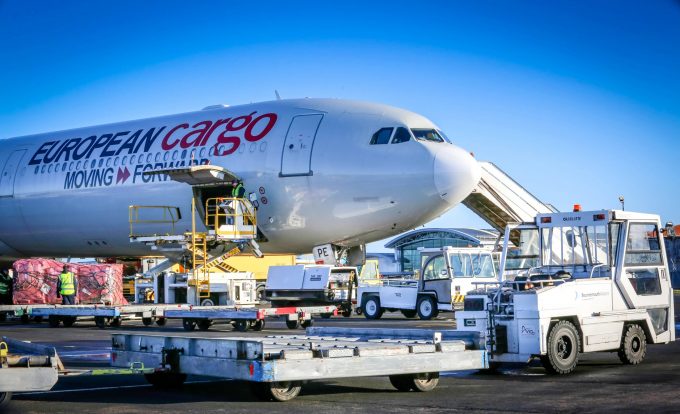
European Cargo’s collapse appears to have been driven by a combination of rising operating costs, customer concentration and mounting financial pressure, rather than fuel prices alone.
The Bournemouth-based freighter airline entered administration on 3 June, with Teneo Financial Advisory citing reduced flying activity, working capital pressures, and fuel costs as the key factors.
Yet an examination of company filings, operational data, and industry feedback suggests the roots of the collapse may stretch back much further.
The airline built its business around converted A340-600 aircraft, creating one of the most distinctive fleets in the air cargo industry. While the Airbus planes offered low acquisition costs and significant capacity, they carried the burden of four engines at a time when much of the freighter market was shifting towards more fuel-efficient twin-engined aircraft.
The challenge was not simply fuel prices, according to former European Cargo CEO David Kerr, who now runs JTD Advisory.
“The simple equation is that fuel surcharge mechanisms needed to keep the economics of a four-engine freighter contract flying were likely unsustainable for a narrow customer base,” he told The Loadstar.
But European Cargo had never fully escaped the financial pressures associated with its growth strategy.
Accounts for 2024 show revenue of $136.3m, but a net loss of $26.1m, following a loss of $30.6m the previous year. The airline reported net liabilities of $41.8m and acknowledged a continuing reliance on shareholder support, despite management’s view that the business had reached operational break-even.
At the same time, the carrier was expanding.
European Cargo added operations from Teesside International Airport, continued to develop services linking the UK with western China, and publicly discussed further growth opportunities. Routes to destinations including Urumqi, Chongqing, and Chengdu became central to the airline’s network.
Operational data reviewed by The Loadstar suggests flying activity actually reached its highest levels in March. Volumes declined sharply in April before collapsing last month. By the second half of May, activity had largely ceased, several weeks before administrators were appointed.
The timing raises questions over what changed so rapidly. Mr Kerr believes customer concentration may have played an important role.
“Clients who are agents fronting a few ecommerce retailers carry a big working capital risk and the hope of origin airport incentives at the back end,” he said. “That intermediary model must be under severe pressure from end-customer and airlines.”
European Cargo’s network had become heavily focused on China-related cargo programmes, particularly routes serving its western cities. The airline and its airport partners frequently highlighted growth in ecommerce traffic, while Shenzhen Sharing Express Logistic-Tech (SSELT) featured prominently in announcements on the development of the Chengdu-Bournemouth cargo corridor.
Although the precise commercial relationships remain unclear, Mr Kerr’s comments suggest the airline may have been operating within a relatively concentrated customer base.
He himself questioned whether the carrier had diversified sufficiently.
“I had made enquiries to ECL on behalf of potential clients, but they seemed reluctant to quote, perhaps at risk of upsetting their key client, or believing they had the market covered,” he said.
“The lack of commercial diversity or ambition was a likely contributor, but not the root cause.”
The airline’s ownership structure also changed significantly in late 2024.
On 19 November, European Aviation exited the business and was replaced by new shareholders, including Carlos Miguel Amorim Da Silva and Trimcomlee Ltd. The restructuring coincided with a major refinancing exercise involving Nordic Trustee-backed financing arrangements secured against aircraft and shareholdings.
Those financing arrangements were amended again in March and April this year, only weeks before operations ceased.
Whether the refinancing activity reflected growth plans, funding pressures, or efforts to support a business facing deteriorating trading conditions remains unclear.
What is clear is that European Cargo was attempting to operate a specialised fleet in an increasingly challenging market.
Mr Kerr believes geopolitical events may also have accelerated the pressure on the business.
“A committed, professional, and enthusiastic operational team survived perhaps longer than the Ukraine and Gulf conflicts should have allowed,” he said.
For now, the administrator’s explanation remains limited to reduced flying activity, working capital pressures, and fuel costs.
But the evidence emerging from the carrier’s final months suggests a more complex picture – of a loss-making airline pursuing growth, dependent on a relatively narrow customer base and operating a fuel-intensive fleet in a market that had become increasingly unforgiving.
The administrator’s proposals and creditor reports, when published, are expected to provide a clearer picture of what ultimately grounded one of the industry’s most unusual freighter operators.