
ID 162129857 ©
| Dreamstime.com
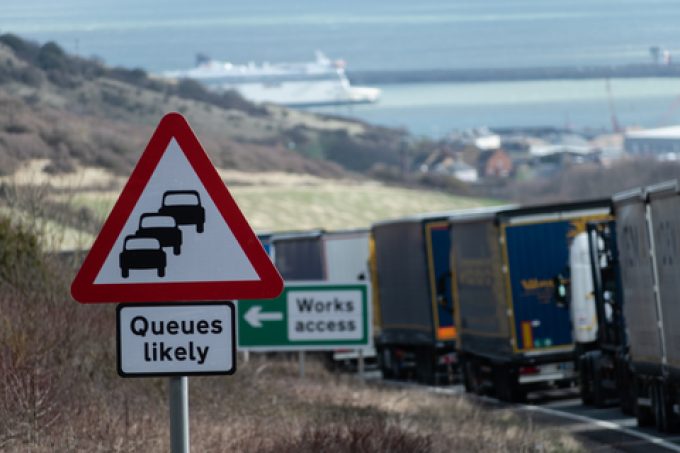
Pictures of enormous queues of British tourists waiting at continental European passport controls are normally the stuff of tabloid newspapers, but the mounting chaos over the EU’s new Entry Exit Scheme is now threatening to cut-off a major UK-Europe freight artery.
As the summer holiday peak nears, Dover Harbour Board chief executive Doug Bannister has warned that problems in processing tourists’ passports, under the new EES arrangements, could also cripple freight flows through the port, which typically handles around 30% of the UK’s maritime trade with continental Europe via shortsea ferries.
In a letter to the UK’s parliamentary select committee on business and trade (BTC), Mr Bannister explained that a precursor to the coming months had been seen in mid-May, during the school half-term break, when the port had to declare a ‘critical incident’ after vehicle queues rapidly built up to 4.5 hours.
“This was after only a few hours of EES processing on the first Saturday resulted in severe congestion, lengthy delays and widespread gridlock including the two primary routes into the town,” he wrote.
“This occurred on a day when around 8,500 tourist vehicles travelled through the port. In only a matter of weeks, Dover will enter the peak summer getaway period when daily volumes can regularly exceed 12,000 vehicles,” he added.
Dover invested £40m in the construction of 84 new passport kiosks in its Western Docks area to handle the EES process, but Mr Bannister said official French policy was to only process tourist cars in the Eastern Dock area, “where border capacity is far more constrained” because of an inoperability issue “completely beyond the port’s control”, and which has been seen at other key passenger nodes such as airports since EES introduction.
“With much of the summer being full of days with high tourist volumes, there is a danger of continuing disruption for freight traffic to and through the port,” Mr Bannister added.
“Ironically, the vast majority of hauliers exiting the UK hold European passports and so do not need to get caught up in EES, but will do so because of the inability to bypass the queues of tourist and local traffic.
“Furthermore, the goods being transited are primarily just-in-time products [like] medicines, automotive components, fresh food, that must be on the shelf or on an assembly line within a very short time-window,” he said.
As a result, the port has called for a “diplomatic resolution that does not resign us to relying on contingency plans after the congestion has occurred”, but with tha prospect looking dim, it has called for the EES to be “stood down” for the remainder of the summer.
“Handling one-third of all UK trade in goods with the EU, the port of Dover should play a central role in the wider UK/EU reset agenda to make trading with our largest and closest trading partner easier.
“However, with border authorities currently maintaining the same approach as for May half-term, this could cause untold disruption across Kent – far worse than we have just experienced – and will be damaging for tourism, for our ferry customers and their business, for the wider economy and for the progress the government wishes to make in the reset,” Mr Bannister added.
BCT committee chair Liam Byrne MP urged the UK government to forge an agreement with France.
“The port of Dover has sounded the alarm. Without an agreement with France to pause the new EU border tech this summer, Britain risks border chaos again.
“Ministers must urgently secure that agreement now. Once queues stretch for miles through Kent, it will be too late,” he said.
This article is © The Loadstar. Reproduction, rewriting, or derivative use requires a license. Contact [email protected] for licensing enquiries.