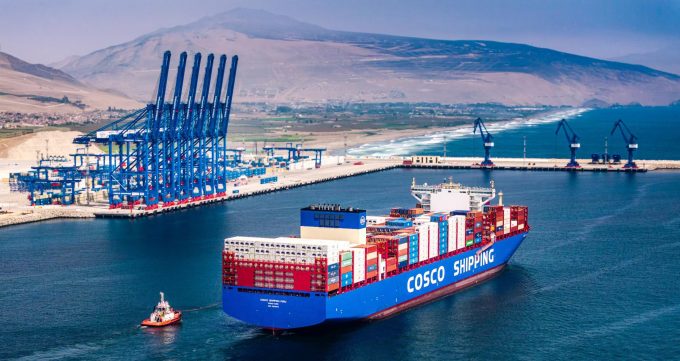

Photo: Cosco Shipping
Cosco Shipping Lines is pushing ahead with one of the industry’s largest newbuilding programmes, seemingly unperturbed by overcapacity concerns.
Currently, Cosco and subsidiary OOCL have ordered 100 vessels, for around 1.46m teu of new capacity, as well as leases for vessels under construction totalling around 500,000 teu, all scheduled for delivery by 2030.
As at 30 September, the self-operated container fleet stood at 610 vessels, with total capacity of roughly 3.66m teu, which are deployed on 458 routes, calling at 676 ports in some 147 countries.
For the first nine months of the year, Cosco Shipping Holdings’ revenue was up 12% year on year, at $28bn, while net profit was up 13%, to $4.65bn.
During an online briefing to shareholders, Cosco representatives said: “Newbuilding decisions are grounded in rigorous analysis of trade trends and long-term capacity planning, not speculative ordering.”
The company cited the key justifications as fleet renewal and modernisation, as environmental regulations tightened.
“More than 22% of the existing global container fleet will be over 20 years old and likely slated for scrapping by 2028–2029. We expect long-term growth in global freight demand to remain intact ,and we also need to ensure supply chain security amid rising geopolitical instability and restructuring of global industrial chains.”
It added that “orderly expansion” helped consolidate its competitive advantages on trunk routes between Asia, Europe, and the Americas, while “providing a stable capacity foundation for exploring emerging markets”.
Management added that Cosco was pursuing “an integrated container shipping + ports + logistics” strategy, and recently opened a regional headquarters in Chongqing to secure cargo from factories there.
On the commercial side, Cosco’s representatives said maintaining long-term, stable customer partnerships remained a cornerstone of its strategy.
They said: “Negotiations for new annual long-term contracts on European routes have begun, while transpacific negotiations typically run between February and April of the following year. Our negotiations are based on market trends and working with customers strengthens our earnings base and resilience against market volatility.”