Photo: VesselFinder
With shipping’s peak season now well under way, container freight spot rates resumed their steep upward trajectory this week on the main east-west trades, following a series of carrier price hikes introduced on 1 July.
However, compared with the double-digit increases seen a fortnight ago, after the last round of price announcements – which led Drewry’s World Container Index (WCI) to record strong double-digit week-on-week spot rate increases on the transpacific and Asia-Europe trades – this week’s increases were more moderate.
The WCI’s Shanghai-Rotterdam leg increased 7% week on week, to finish at $4,682 per 40ft, while the Shanghai-Genoa route was up 10% on the previous week, to $6,360 per 40ft.

Source: Drewry Supply Chain Advisors
While there is little question that the early peak season caught many Asia-Europe shippers and their forwarders by surprise, several factors suggest the market is nearing the apex of peak season pricing.
First, the “Fortnight Brace” principle outlined by Loadstar Premium this week appears to be still be at work.
Today’s Shanghai Containerised Freight Index (SCFI) – which records rates quoted for the forthcoming week and, as such, can indicate the behaviour of the following week’s WCI (as it did last week) – shows spot rates to the Mediterranean up by 1% and flat to North Europe.
Secondly, demand now appears to be steady rather than soaring, and one Asia-Europe forwarder told The Loadstar this week that some carriers were beginning to discount on next week’s bookings.
“The first half of July is looking like it might be the peak – we’re already seeing reductions come in for 6 July; bookings are steady and at the moment we’re not seeing much in the way of problems with bookings and space for July,” he said.
However, he added, it would still take a few weeks for carriers to work through the pools of containers rolled during June.
“We know there is still plenty of rolled cargo to move, so we’re not expecting rates to fall off a cliff just yet, but we do expect rates to start to soften through August,” he said.
“I think we are reaching the peak level,” another forwarder told The Loadstar. “Another clue here is the validity a few of the lines are now offering, no longer weekly, and now to the end of July, which indicates no further increases. I suspect, we may see some slight decreases.
“The carriers are still managing allocation agreements closely. However, not as many rollings, which does suggest a sign of the chaos starting to ease going into August,” she said.
A third sign is that, as the new mid-July FAK (freight all kinds) levels being announced by carriers are substantially less of an increase than in June – for example, MSC published an FAK rate of $7,700 per 40ft to North Europe for 15 July, compared with $7,500 for 1 July and $6,000 on 15 June.
However, it is a different story on the transpacific trades this week, as the peak season appears to have coincided with a short wave of US importers front-loading to avoid some hefty mid-July peak season surcharges – South Korean carrier HMM announced a transpacific PSS of $3,000 per 40ft for 15 July.
“Carriers are testing the market’s upper limits by introducing an additional $1,500 GRI for the first half of July,” noted US west coast freight forwarder Freight Right.
“This triggered a massive, last-minute rush at the end of June as shippers scrambled to push containers out of China to avoid the premium.
“Importers have fundamentally compressed the typical multi-month peak season – fearing prolonged volatility, businesses pulled-forward orders they did not immediately need, clogging current vessel capacity with goods destined for sales cycles months down the line,” added the firm.
The WCI’s Shanghai-Los Angeles leg was up 10% week on week, to end at $6,349 per 40ft, while its Shanghai-New York route rose 11%, to $7,902 per 40ft.
And today’s SCFI indicates further increases of a similar magnitude can be expected next week, with its Shanghai-US west coast route up 9%, and up 12% to the US east coast.
“Ocean container shipping is running hot on the transpacific, with offered capacity from Far East to US west coast hitting an all-time high this week and spot rates showing another double-digit increase, to sit +253% compared with pre-Strait of Hormuz crisis at the end of February,” Xeneta chief analyst Peter Sand said.
“The combination of record capacity deployment and further rate increases on the transpacific tells us demand is strong and that carriers are scrambling to satisfy it,” he added.
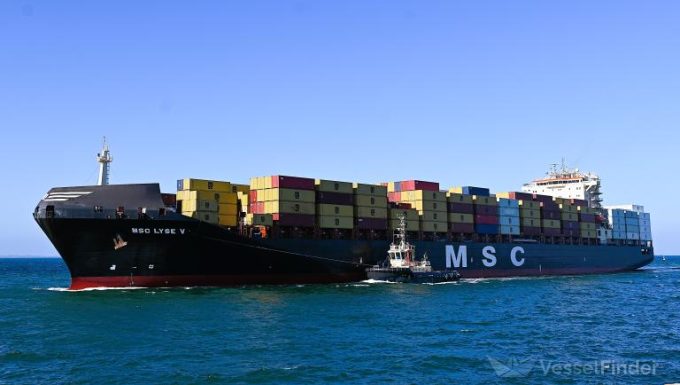
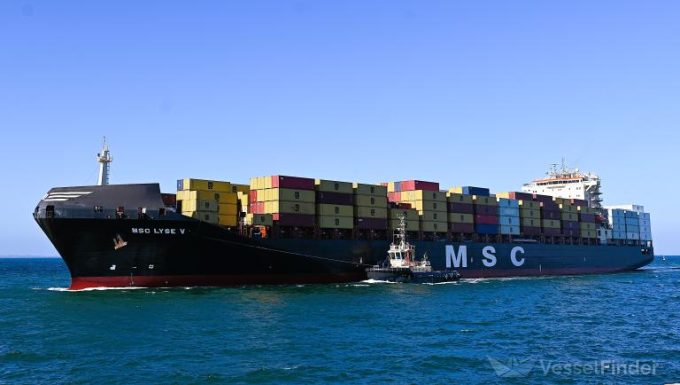
According to Xeneta data, “carriers are adding capacity fast”: MSC reinstated its transpacific Pearl service on 13 June, with MSC LYSE V the first vessel to call at Long Beach on 30 June; while Yang Ming and ONE are running extra-loaders.
“More capacity is welcome and will help shippers to move goods more reliably, but it is not enough to reverse the upward [pricing] trend,” Mr Sand added.
This article is © The Loadstar. Reproduction, rewriting, or derivative use requires a license. Contact [email protected] for licensing enquiries.