
Joint Typhoon Warning Center
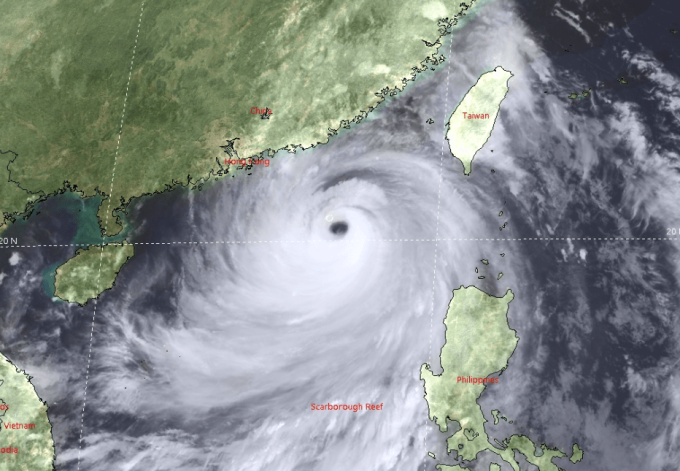
Congestion may be easing in eastern China, but with Typhoon Champi set to sweep across the north-east coast of Taiwan tomorrow there are concerns that disruption to vessel movements could undo benefits carriers are seeing in China.
Maersk told customers waiting times at ports along the east China coast were showing a continued week-on-week decline, with its wider east Asian network stabilising following disruption from earlier typhoons.,
The carrier said: “Recovery efforts across East Asia continue to progress, although strong export demand is putting pressure on congested ports. Operational conditions at East China ports have improved. Vessel wait times have continued to decline.
“While the direct impact of recent typhoon activity has largely subsided, recovery across the wider regional network remains ongoing. Conditions across the port network continue to influence overall cargo flows and schedule recovery.”
Maritime services provider Mas Oceans is, however, warning that fresh adverse weather associated with Typhoon Champi could create “further operational challenges”, with reports that pilotage at the Changjiang Estuary had been suspended.
Furthermore, there have been restrictions on vessel movements at some ports, with anticipated closures affecting Zhejiang, Fujian, and surrounding areas if the typhoon matches forecast severity, raising the prospect of renewed delays.
Chantal Roberts, director of Drewry Supply Chain Advisors, said if a port was forced out of operation for even a day, “you need around five weeks in a quiet period, or about two months in a peak period, to really clear that backlog”.
The extent of any typhoon-induced disruption will depend on how long restrictions remain in place, the number of vessels affected and how quickly terminals can clear backlogs once operations resume.
And, if the threat of a typhoon was not enough, Maersk noted it was likely intermittent delays would continue along its East Asia network, adding that it was “monitoring conditions and contacting customers whose shipments might be affected” to discuss available options.
Elsewhere, the Danish carrier sailed nearly double the number of vessels through the Suez Canal over the nine months to October as it did during the same period last year, according to figures from the Suez Canal authority.
With a total of 23.3m tonnes moved through the besieged waterway this year, compared with 7m last year, Maersk chief operating officer Rabab Boulos told the authority the group hoped to return all its services to the canal by March.